Global buyers need more than a low plywood price. They need predictable strength, stable supply, clear grading, and responsible sourcing. The FAO Global Forest Resources Assessment 2020 reports that forests cover about 31% of the world’s land area. That figure highlights the importance of traceable timber procurement. It also reminds buyers that species selection affects both performance and environmental accountability.
This guide examines ten CDX plywood types used across construction, packaging, roofing, wall sheathing, and industrial projects. The comparison includes pine, fir, spruce, and mixed-hardwood panels. It considers veneer quality, core gaps, glue performance, thickness tolerance, face appearance, and exposure classification. CDX is generally rated for exterior exposure, not permanent outdoor immersion. That difference matters beside a wet jobsite.
Cdx Pine Plyood remains popular because pine offers broad availability, practical machining, and a familiar cost structure. However, pine panels can vary noticeably in density, resin content, knots, and surface sanding. A cheaper sheet is not automatically a better purchase.
The APA Engineered Wood Association emphasizes standardized panel performance and proper installation practices. Meanwhile, UNECE and FAO forest-products market reviews show how freight costs, housing demand, and trade conditions can influence availability. These reports support a practical buying approach, but they cannot replace mill-level inspection.
No ranking is absolute.
A reliable specification should request test reports, product standards, moisture limits, bundle photos, and independent quality records. Buyers should also confirm formaldehyde compliance and chain-of-custody documentation where required. Some details may be overlooked, even by experienced purchasers. That is why this review treats price, performance, documentation, and supplier consistency as connected decisions rather than separate features.
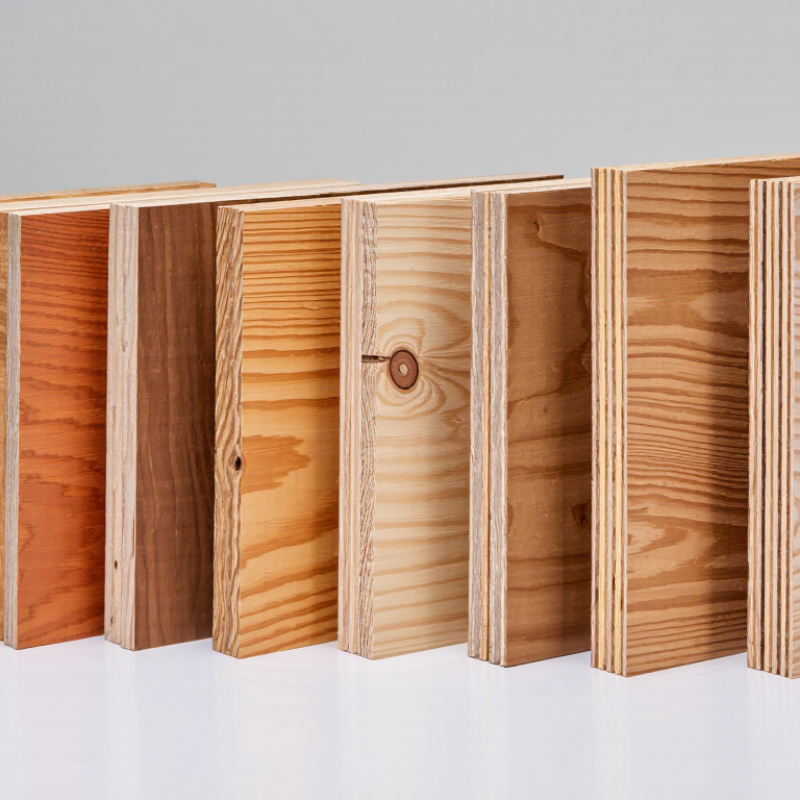
CDX plywood is commonly described by its face grades: one C-grade veneer and one D-grade veneer. The “X” refers to Exposure 1 bonding, not waterproof performance. Its thin wood veneers are bonded with alternating grain directions, creating a layered panel that resists splitting and handles loads across more than one direction. The U.S. Department of Commerce’s PS 1-19 standard covers veneer grades, bonding, and panel requirements. APA’s Engineered Wood Construction Guide identifies 4-by-8-foot panels as a standard format. That size is easy to recognize on a jobsite, but thickness and span rating still determine suitability.
CDX is often used for roof, wall, and floor sheathing where panels may face temporary construction moisture. Exposure 1 adhesive is designed to tolerate brief wetting during construction; it does not make the panel suitable for continuous outdoor exposure. The rougher D-grade side may contain visible defects, so appearance is not its selling point. That distinction is easy to miss. A panel can look sound and still need protection from prolonged rain, standing water, and poor ventilation.
Tips: Check the grade stamp for thickness, span rating, and Exposure 1 before buying. Store sheets flat, raised from the ground, and covered while allowing airflow. If a project needs lasting weather resistance, specify a suitable exterior-rated panel instead. Real sites are messy; even careful storage can fall short.
CDX plywood is classified by face grade, adhesive performance, wood species, treatment, and panel format. The C face allows limited knots and repairs. The D face permits more visible defects. X indicates exterior-rated glue, not unlimited waterproofing. The label is not a complete specification.
In global purchasing, ten practical CDX types appear most often.
Specification checks matter more than the sales name. Confirm thickness, veneer core, exposure rating, span rating, formaldehyde class, moisture content, and edge condition.
A reliable supplier should provide current technical documents and readable mill stamps. Inspect several sheets for open gaps, edge swelling, delamination, and excessive patches.
I have seen buyers choose by species alone, then discover poor dimensional stability after shipment. That mistake is easy to repeat.
Local climate, framing spacing, and installation quality can change the best choice. Availability also varies by region, so one category may not perform equally across markets.
Global buyers often compare CDX plywood by wood species, grade, and jobsite performance. CDX means C-grade face, D-grade back, and exterior-rated glue. It is usually a sheathing panel, not a finished surface.
Douglas-fir structural CDX offers strong framing support. Southern pine subfloor CDX provides good stiffness under foot traffic. Southern pine roof-sheathing CDX handles common roof loads. Radiata pine wall-sheathing CDX is lighter and easier to cut. Spruce-pine-fir CDX suits economical interior framing and protected walls. Hem-fir CDX performs well in general construction. Western fir CDX is useful for roof and wall panels. Mixed-softwood CDX can reduce cost, but its strength may vary between mills.
Two application-focused options deserve careful attention. Pressure-treated CDX supports exposed utility structures, such as temporary platforms and outdoor service panels. Fire-retardant CDX serves approved wall or roof assemblies where local codes require tested performance. It is not automatically suitable for every building system. Check the treatment certificate.
Grade matters as much as species. Sheathing-grade panels may show open knots, patches, and visible repairs. Sanded panels cost more and remain uncommon in standard CDX supply. I have seen buyers focus on price, then discover uneven thickness during installation. A small error becomes obvious across a long wall. Request the grading stamp, thickness tolerance, veneer species, exposure classification, moisture content, and test reports. Some suppliers describe panels loosely, so the product name alone is not enough.
| No. | Common Type / Species | Typical Face Grade | Typical Core / Construction | Typical Applications | Buyer Considerations |
|---|---|---|---|---|---|
| 1 | Douglas Fir CDX | C face / D back, where marked to the relevant panel standard | Typically veneer plies; confirm panel standard and lay-up | Roof and wall sheathing, subfloors, general construction | Often selected for stiffness; check span rating, thickness, and local structural requirements. |
| 2 | Southern Pine CDX | C face / D back, subject to the applicable grading rules | Pine veneer construction; panel properties vary by product specification | Subflooring, roof and wall sheathing, framing-related uses | Confirm rated span and design values; some pine panels may be relatively heavy. |
| 3 | Spruce-Pine-Fir (SPF) CDX | C face / D back, where specified and certified | Softwood veneer; species mix can differ by mill and region | General sheathing and construction panels | Request the actual species group and panel stamp; “SPF” denotes a group, not one species. |
| 4 | Hem-Fir CDX | C face / D back, subject to grade rules and certification | Hemlock and fir species group; veneer make-up varies | Roof and wall sheathing, general building work | Verify the applicable structural rating and suitability for the intended exposure. |
| 5 | Larch CDX | C face / D back if produced and graded to that specification | Larch veneer; construction and grading are supplier- and region-dependent | Structural sheathing and general construction where locally specified | Availability and recognized structural ratings vary; check certification before substitution. |
| 6 | Radiata Pine CDX | C/D-type faces only when graded to the buyer’s specified standard | Radiata pine veneer; export products may use different grading systems | Construction sheathing and general-purpose building panels | Do not assume a “CDX” label is equivalent across markets; compare standards and test data. |
| 7 | Mixed Softwood CDX | C face / D back, when the panel is graded and marked accordingly | Multiple softwood species may be used in the veneers | Non-finish sheathing and general construction applications | Ask for species-group, bond, and structural information when interchangeability matters. |
| 8 | Structural CDX Sheathing | C-D faces; structural suitability depends on the certified panel grade | Species may vary; typically marked with a structural rating or span information | Load-bearing roof, wall, and floor sheathing as designed | Select by engineering design values and span rating, not face appearance alone. |
| 9 | Exposure 1 CDX | Usually described as C-D faces when that grade applies | Can be made from different softwood species and panel constructions | Construction use with temporary exposure to weather during normal building delays | Exposure 1 is not a claim of permanent exterior durability; protect panels and follow installation guidance. |
| 10 | Exterior-Bond C-D Plywood | C-D faces where graded to the relevant standard | Species and panel grade vary; must be specifically rated for exterior exposure | Exterior applications only where the panel marking and project specification permit | “CDX” alone does not guarantee an Exterior bond; confirm the panel stamp and local code requirements. |
Note: “CDX” is commonly used as a trade description for C-D face grades with an Exposure 1 bond classification in some markets. Terminology, grading rules, species availability, and structural ratings vary by country and standard. Confirm the panel stamp, applicable certification, thickness, span rating, and project requirements before purchase. Plywood is not automatically waterproof or suitable for permanent outdoor exposure.
CDX describes a plywood panel with C-grade face and D-grade back veneers, bonded for Exposure 1 conditions. It is not a universal performance grade. U.S. buyers should check the panel stamp against the Voluntary Product Standard PS 1, while international projects may require different national specifications. Check the actual stamp. It can identify the mill, thickness, panel grade, and span rating. Common sheets measure 4 by 8 feet, but metric and project-specific sizes are also available. Nominal thickness is not always the measured thickness.
The APA Engineered Wood Construction Guide explains how span ratings relate to panel use over supports; a rating such as 32/16 indicates different maximum support spacing for roof and subfloor applications. Verify the rating against joist spacing and local design requirements. For performance, inspect veneer gaps, edge damage, and panel flatness before installation. Exposure 1 panels tolerate construction moisture, not prolonged weather exposure. The USDA Forest Products Laboratory’s Wood Handbook details how changing moisture content affects wood dimensions and properties. A wet panel may swell at its edges. That detail is easy to underestimate. CDX can suit protected sheathing, but it is not automatically the right choice for every climate or finish; specifications and site conditions still deserve a second look.
For global buyers, CDX plywood should be compared by performance, not appearance alone. The ten practical categories include standard softwood, structural-rated, exterior-glue, pressure-treated, fire-retardant, radiata-pine, Douglas-fir, spruce, poplar-core, and tongue-and-groove panels. CDX describes face grades, while “X” indicates exposure-resistant glue. It does not mean permanent outdoor durability. Check thickness, veneer quality, formaldehyde class, moisture content, and mill certificates before ordering. Small details matter.
The FAO Global Forest Resources Assessment 2020 reports 4.06 billion hectares of forest worldwide. It also records a decline in annual forest loss, from 7.8 million hectares during 1990–2000 to 4.7 million hectares during 2010–2020. These figures support responsible sourcing, but they do not prove one plywood species is always better. Ask for legal-origin documentation and chain-of-custody evidence.
The UNECE/FAO Forest Products Annual Market Review 2023–2024 highlights continuing regional volatility in wood-product supply and prices. Compare landed cost, not factory price. Include freight, fumigation requirements, packaging, inspection, and replacement risk.
Roofing
Structural ratings and panel spans deserve priority.
Wall sheathing
Dimensional stability and edge sealing may matter more.
Humid transport routes
Moisture readings are essential.
Practical warning: “water-resistant” is often misunderstood. It does not equal waterproof.
The ranking is imperfect. Local standards, climate, and installation quality can reverse the preferred choice. Always match the panel certificate with the destination country’s construction requirements.
