China Top Outdoor Dining Set Manufacturers

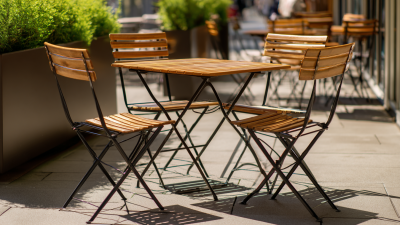
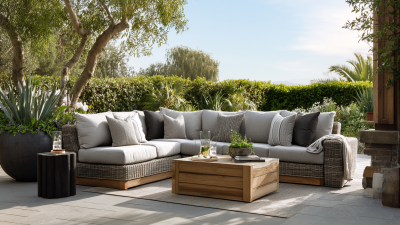
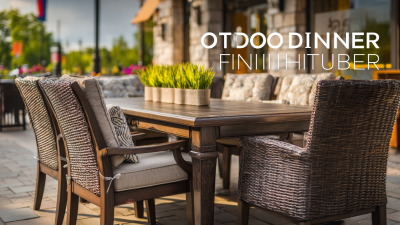
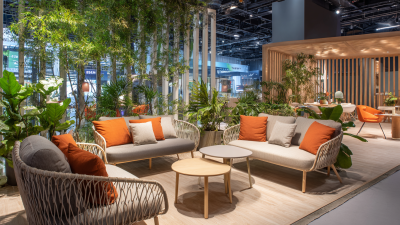
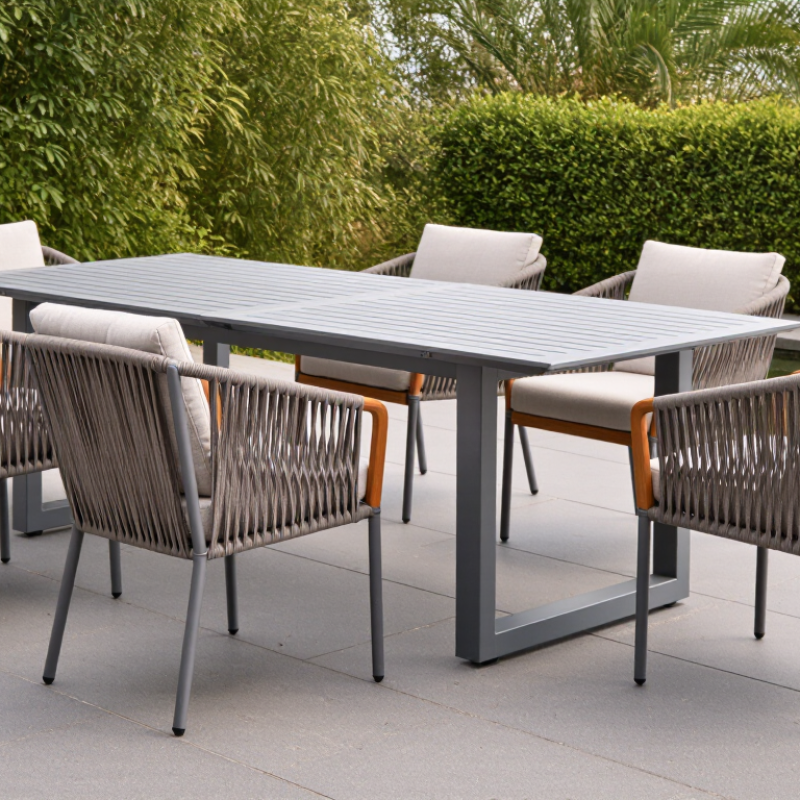
China has become a major sourcing destination for the Outdoor Dining Set industry. Its manufacturers serve hotels, restaurants, resorts, retailers, and residential projects worldwide. Their product ranges often include aluminum dining tables, rope-woven chairs, teak furniture, and modular seating.

Richard Frinier, a respected outdoor furniture designer, once said, “Outdoor living is a lifestyle, not a trend.” This idea shapes today’s buying decisions. A suitable Outdoor Dining Set must look attractive, but appearance is only one part of performance. Buyers should examine aluminum thickness, welding quality, powder-coating consistency, fabric durability, drainage design, and replacement-part availability.

Small details matter. A chair should remain stable on uneven stone flooring. Table legs should resist movement during windy evenings. Cushions need quick-drying foam, especially near pools or humid coastlines. Salt spray can expose weak finishes surprisingly fast.

This guide introduces leading China Top Outdoor Dining Set Manufacturers and explains what separates reliable suppliers from ordinary factories. It considers production experience, customization ability, material control, export support, and quality inspection practices. Factory scale alone does not guarantee dependable furniture. That is worth remembering.

A polished showroom may hide inconsistent welds or weak packaging. Samples can also perform better than mass production. Therefore, responsible sourcing requires factory audits, pre-shipment inspections, material documents, and realistic testing. Some claims remain difficult to verify without independent evidence. That is an uncomfortable limitation.

The manufacturers discussed here may suit different project needs. Some focus on commercial durability. Others emphasize design flexibility or competitive pricing. Comparing them carefully can reduce costly surprises and support better long-term outdoor spaces.
China Top Outdoor Dining Set Manufacturers

Definition and Scope of Outdoor Dining Set Manufacturers

Definition and Scope of Outdoor Dining Set Manufacturers

Outdoor dining set manufacturers are companies that design, produce, and supply furniture for meals in open-air environments. Their products may include dining tables, chairs, benches, and coordinated accessories. These sets serve patios, gardens, balconies, restaurants, hotels, and shared residential spaces. The scope is wider than simple furniture assembly.

Outdoor
Dining
Furniture

A professional manufacturer manages material selection, product engineering, production, quality inspection, and packaging. Common materials include powder-coated aluminum, treated timber, stainless steel, synthetic rattan, and weather-resistant fabric. Each material reacts differently to sunlight, rain, salt air, and temperature changes. A reliable supplier should explain these limits clearly. Outdoor furniture is not maintenance-free.

Product Scope

Manufacturers may offer standard collections, customized dimensions, private production, or contract furniture for commercial projects. Their work can involve prototype testing, load checks, surface coating inspection, and moisture-resistant packaging. For example, a dining chair should remain stable on uneven paving and support repeated daily use. Small details matter. Drainage holes, rounded edges, replaceable feet, and accurate frame joints can affect long-term performance.

However, product claims still require careful verification. A strong appearance does not prove outdoor durability. Buyers should review material specifications, test records, production experience, and after-sales procedures before making decisions.

Key Products and Materials Used by Chinese Manufacturers

China’s outdoor dining set manufacturers commonly produce dining tables, armchairs, benches, and stackable patio chairs. Their key materials include powder-coated aluminum, stainless steel, teak, synthetic rattan, and HDPE lumber. Each material suits different outdoor conditions and budgets.

Powder-coated aluminum is lightweight, rust-resistant, and easy to move around terraces. Stainless steel provides stronger support, especially for larger tables, but it needs suitable surface treatment near coastal areas. Teak offers natural oils and a warm grain, while synthetic rattan creates a woven appearance without absorbing much water. HDPE lumber resembles painted wood and usually requires less maintenance. Reliable manufacturers should provide material specifications, coating thickness, load data, and sample inspections. Small details matter, such as smooth welds, even gaps, and drainage holes beneath tabletops.

Tips: Ask for real production photos, not only polished showroom images. Test chair stability on uneven flooring. Check whether replacement slings, cushions, or table parts remain available. Request outdoor exposure or corrosion-test information when the furniture will face strong sun, rain, or salt air. No material is perfect. A beautiful teak surface may change color, while dark coatings can become hot under direct sunlight. Some suppliers also overstate durability, so independent inspection is worth considering before a large order.

China Top Outdoor Dining Set Manufacturers: Key Products and Materials Used

Outdoor dining sets commonly include dining tables, dining chairs, and bar-height furniture. The chart compares the typical density of widely used materials in these products, helping explain differences in weight, durability, and portability. Values are approximate material reference data and do not represent any specific company or brand.

Key takeaway: Aluminum and HDPE are often selected for lightweight outdoor furniture, while stainless steel and teak provide greater mass and a more substantial feel. PE rattan is commonly used as a lightweight woven surface over a metal frame.

Manufacturing Processes and Quality Control Standards

China Top Outdoor Dining Set Manufacturers: Manufacturing Processes and Quality Control Standards

Reliable outdoor dining set production begins with controlled material selection. Manufacturers inspect aluminum, steel, wood, fabric, and synthetic fibers before cutting or forming. They verify thickness, moisture content, surface condition, and supplier records. This step prevents hidden weaknesses later.

The production line usually includes CNC cutting, welding, sanding, coating, weaving, and final assembly. Skilled workers check joint alignment with gauges, not only by sight. Powder coating requires measured temperature, film thickness, and curing time. Poor curing can cause peeling after rain or strong sunlight. For wooden components, controlled drying reduces warping and cracking. Assembly teams inspect screw torque and protective caps. Small details matter.

Quality teams often use ISO 9001-based procedures, while product tests may follow applicable ASTM or EN requirements. Outdoor sets can undergo load testing, corrosion exposure, UV evaluation, and surface adhesion checks. Inspectors also test table stability on uneven floors. Each batch should carry traceable records, including material lots, operator checks, and corrective actions. Packaging inspections protect corners, finishes, and glass surfaces during transport.

Not every batch is perfect. A coating shade may vary slightly, or one chair may need adjustment. Honest manufacturers record these problems instead of hiding them. However, visual inspection alone remains insufficient. Independent testing and repeated factory audits provide stronger evidence. Manufacturers should review customer feedback and update inspection points when failures appear.

Customization, Certifications, and Export Capabilities

China’s outdoor dining set manufacturers increasingly support detailed customization for hospitality and residential projects. Buyers can adjust table dimensions, chair frames, cushion fabrics, colors, and packaging. Experienced factories usually confirm drawings before production. A physical sample matters.

Material selection affects outdoor performance. Powder-coated aluminum resists rust, while teak requires regular maintenance. Textilene dries quickly after rain. Yet no material performs perfectly in every climate. Coastal air, strong sunlight, and winter storage can change the specification.

Certifications should match the destination market and product category. Reliable manufacturers can provide material reports, load testing records, chemical compliance documents, and factory quality procedures. Buyers should verify document dates and testing scope. A certificate for one component may not cover the complete dining set.

Export capability involves more than loading containers. Mature suppliers calculate carton dimensions, stacking limits, moisture protection, and container utilization. They also prepare commercial invoices, packing lists, shipping marks, and origin documents accurately. Clear Incoterms reduce misunderstandings about freight and insurance. Production updates, pre-shipment inspections, and photo records improve accountability.

Some manufacturers offer flexible minimum order quantities, but customization often increases tooling and packaging costs. Delivery estimates may also shift during peak seasons. This is easy to overlook. A careful buyer should compare approved samples, inspection standards, replacement policies, and long-term spare-part support before placing a large order.

How to Evaluate China’s Outdoor Dining Set Manufacturers

China Top Outdoor Dining Set Manufacturers

How to Evaluate China’s Outdoor Dining Set Manufacturers

Evaluating China’s outdoor dining set manufacturers requires more than comparing catalog photos. Request factory videos, material certificates, and recent production records. A credible supplier should explain aluminum grades, coating thickness, wood moisture content, and hardware specifications. Ask who performs testing. Independent reports are more useful than attractive claims. Check whether production equipment matches the promised capacity. A crowded showroom proves very little.

Order a sample set before discussing a large purchase. Inspect welds under the tabletop, chair balance, drainage holes, and edge finishing. Leave the furniture outdoors for several weeks, if your schedule allows. Look for fading, trapped water, rust marks, and loose fasteners. Also compare packaging details. Corners need protection, while stacked chairs need separators. Ask for written details on minimum order quantities, replacement parts, lead times, and customization fees. Vague answers may create expensive delays.

Reliability appears in communication after the sale. Evaluate response speed, complaint handling, inspection access, and willingness to correct defects. Contact two or three recent buyers, not only the references selected by the factory. Use a pre-shipment inspection with measurable standards. Photographs alone can miss uneven powder coating or unstable legs. I would not ignore price, but an unusually low quote deserves careful questioning. Even experienced buyers can overvalue polished samples and underestimate seasonal delivery pressure. That mistake is worth remembering.

China Top Outdoor Dining Set Manufacturers - How to Evaluate China’s Outdoor Dining Set Manufacturers

Evaluation Dimension Suggested Weight Practical Benchmark Evidence to Request Suggested Score
Product Construction 15% Stable frames, accurate welding, smooth edges, reliable hardware, and level table surfaces. Technical drawings, material specifications, product samples, and inspection photographs. 1–5
Material Suitability 12% Material choice should match the climate, including humidity, ultraviolet exposure, rain, salt air, and temperature changes. Material grades, coating details, fabric specifications, timber treatment records, and corrosion-resistance information. 1–5
Weather Resistance 12% Outdoor finishes should resist fading, peeling, rust formation, moisture damage, and repeated wet-dry cycles. Coating test reports, accelerated weathering results, salt-spray data where relevant, and care instructions. 1–5
Compliance and Safety 10% Products should have no sharp accessible edges, unstable structures, hazardous surface treatments, or misleading compliance claims. Applicable test reports, factory quality procedures, chemical declarations, and destination-market requirements. 1–5
Customization Capability 10% Ability to adjust dimensions, colors, fabrics, finishes, packaging, logo placement, and table configurations. Previous non-confidential project examples, sample approval process, color cards, and revision records. 1–5
Minimum Order Quantity 8% Compare the minimum order with the buyer’s sales forecast; lower quantities may be available for standard items or paid samples. Written quotation showing minimum quantities by model, color, finish, and packaging option. 1–5
Production Capacity 8% The factory should demonstrate sufficient equipment, labor, storage, and scheduling capacity for the required order volume. Capacity statement, production-line photographs, process flow, and a realistic production schedule. 1–5
Lead Time Reliability 8% A common planning reference is approximately 30–60 days after approved samples, deposit, and confirmed materials; timing varies by customization and season. Production schedule, milestone dates, historical on-time delivery records, and written delay procedures. 1–5
Quality Control System 10% Quality should be checked during incoming-material inspection, production, finishing, assembly, and final packing. Inspection checklist, defect classification, corrective-action records, pre-shipment inspection policy, and sample approval documents. 1–5
Packaging and Shipping Protection 7% Packaging should protect corners, glass or ceramic components, painted surfaces, cushions, and hardware during international transport. Packaging specification, carton dimensions, pallet plan, drop-test approach, loading photographs, and spare-parts policy. 1–5
Commercial Transparency 5% Quotations should clearly separate product price, tooling, sample fees, packaging, inland transport, export charges, and payment terms. Formal quotation, pro forma invoice, payment schedule, Incoterms, validity period, and change-order policy. 1–5
After-Sales Support 5% Clear warranty coverage, replacement-part availability, complaint response procedures, and documented resolution timelines. Warranty terms, spare-parts list, response-time commitment, claim process, and maintenance instructions. 1–5
Total 100% Use the weighted score to compare shortlisted manufacturers objectively. / 5.00
Scoring guide: 5 = excellent and fully verified; 4 = strong with minor gaps; 3 = acceptable but requires follow-up; 2 = significant risk; 1 = inadequate or unverified. The lead-time range is a general purchasing reference and should be confirmed for each product, order quantity, season, and destination.

No products in the cart.