China Best Solid Wood Doors for Global Buyers?

China has become a significant sourcing destination for Solid Wood Doors, serving residential, hospitality, and commercial projects worldwide. Its manufacturers offer diverse timber species, custom dimensions, carved panels, and modern minimalist designs. Yet attractive pricing alone does not guarantee dependable quality. Buyers need evidence, not promises.

A reliable supplier should explain timber origin, moisture control, kiln-drying methods, and construction details clearly. Experienced factories usually provide samples, production photographs, technical drawings, and inspection records. Look closely at stile joints, panel movement, veneer consistency, hardware preparation, and finish depth. A door may appear flawless in a showroom but respond differently after ocean transport and installation. That risk deserves practical testing.

Small details matter.

Global buyers should also review packaging strength, labeling, lead times, replacement policies, and documentation for their destination market. Relevant certifications may support responsible sourcing, but buyers should verify their scope and validity independently. Third-party inspections can check dimensions, surface defects, moisture levels, and carton protection before shipment. These steps do not remove every problem. They reduce avoidable surprises.

This guide examines how to compare Chinese Solid Wood Doors suppliers with greater confidence. It considers material performance, craftsmanship, customization, pricing, communication, and after-sales support. Some recommendations may not fit every climate or project type. That is an important limitation. A coastal villa, a luxury hotel, and a dry inland apartment require different specifications. Careful buyers ask uncomfortable questions early, record agreed details, and judge suppliers by consistent evidence rather than polished catalogues.
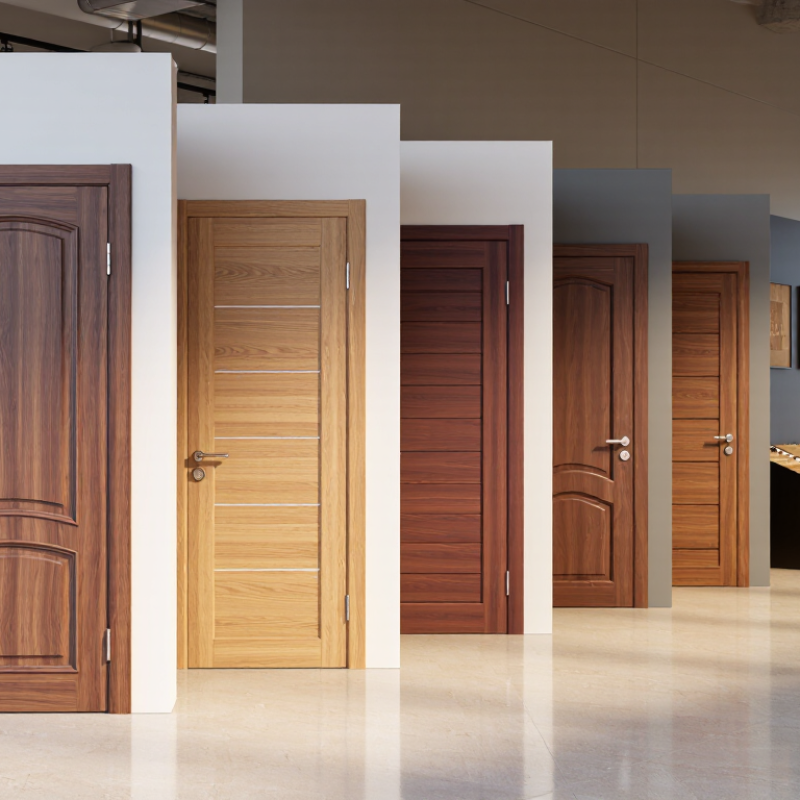
China Best Solid Wood Doors for Global Buyers?

What Defines China’s Solid Wood Door Industry?

China’s solid wood door industry is defined by scale, manufacturing depth, and uneven quality control. The National Forestry and Grassland Administration reported 220 million hectares of forest and 24.02% forest coverage in China’s 2019–2023 forest inventory. This resource base supports broad timber processing, but it does not guarantee responsible sourcing or stable door quality.

A practical factory-audit lesson is simple: examine the core, not only the surface. Ask for species identification, moisture records, adhesive specifications, and production samples. Doors should match the destination climate, because timber movement can cause swelling, gaps, or warped panels. ISO 16883:2015 provides guidance for determining wood moisture content, although buyers still need project-specific limits. Small details matter.

China’s advantage also comes from integrated processing. Many manufacturers combine kiln drying, finger-jointing, carving, coating, and packaging within one supply chain. The FAO Global Forest Resources Assessment 2020 identifies China as one of the world’s major forest-area countries, yet imported timber remains important for several species. Traceability therefore needs written evidence, not confident promises. The industry is capable, but inconsistent. A beautiful showroom door may hide weak edge sealing or rushed drying. Global buyers should compare test reports, inspect unfinished components, and review corrective-action records before judging the “best” supplier.

How Chinese Solid Wood Doors Are Made

China’s Best Solid Wood Doors for Global Buyers?

Solid wood doors begin with careful timber selection, not decorative carving. Manufacturers inspect boards for knots, cracks, grain direction, and moisture content. Timber is usually kiln-dried to reduce later movement. This step needs patience. If drying is rushed, a beautiful door may warp after installation.

Workers then cut, join, and press the components into a stable door structure. Traditional mortise-and-tenon joints can improve strength when made accurately. Some factories also use engineered cores with solid wood surfaces for better dimensional control. This is not always viewed as “pure” solid wood, yet it can perform more reliably in changing climates. Sanding follows several stages, from coarse abrasion to a smooth hand finish. Coatings are applied in thin layers, with drying time between each coat. Experienced inspectors check the surface, corners, hinge areas, and door weight before packing. Small defects can still appear, so honest inspection matters more than perfect photographs.

Tips: Ask for timber species, moisture readings, joint details, coating samples, and pre-shipment inspection photos. Confirm the finished size, opening direction, hardware preparation, and packaging method. A sample door is useful, but it may not represent every production batch. Real projects often reveal this gap.

Which Wood Species and Door Designs Are Available?

China Best Solid Wood Doors for Global Buyers?

Wood species strongly shapes a door’s appearance, stability, and maintenance needs. Oak offers visible grain, reliable strength, and a warm, adaptable finish. Walnut brings deeper color and a smoother, more refined surface. Ash has a lighter tone and open grain, which suits contemporary interiors. Teak performs well in humid conditions, but responsible sourcing and higher cost require careful review. No species is perfect. Even dense timber can warp when moisture conditions change quickly.

Design choices range from classic raised panels to clean, flush-surface doors. Slatted doors can improve visual rhythm and limited airflow. Glazed designs bring daylight into hallways, while carved panels create a more traditional character. Pivot doors make a dramatic entrance, but their hardware needs accurate structural support. I have seen attractive doors fail because the frame was ignored. The door leaf matters, yet hinges, seals, thresholds, and installation matter just as much.

Check timber moisture content before shipment. It should match the destination climate and project requirements. Ask for grain direction, joint details, coating samples, and dimensional tolerances. A practical supplier should explain how the door is packed and protected during transport. Finishes may include clear oil, water-based coating, or painted systems. Sample approval is essential, because online color images can mislead. Small details matter. A good design must survive daily use, not only look impressive in photographs.

China Best Solid Wood Doors for Global Buyers? - Which Wood Species and Door Designs Are Available?

Wood Species Appearance Key Performance Characteristics Common Door Applications Suitable Designs Finishing Considerations Global Buyer Notes
Oak Pronounced grain; available in light to medium brown tones. Hard, wear-resistant, and widely used for durable interior doors. Its natural movement requires proper kiln drying and panel construction. Interior room doors, entry doors in protected locations, and traditional architectural projects. Raised-panel, shaker, carved, glazed, and contemporary slatted designs. Clear finishes emphasize the grain; stains can produce consistent colors across mixed boards. A versatile specification for projects requiring a familiar grain pattern and broad design compatibility.
Ash Pale cream to light brown with an open, straight grain. Strong, relatively lightweight for its strength, and suitable for shaping and steam-bending. It is generally less naturally decay-resistant than teak. Interior doors, modern residential projects, and furniture-style entrance systems. Flat-panel, shaker, minimalist, veneer-matched, and clear-finished doors. Light stains and natural oils preserve its bright appearance; darker stains reduce visible color variation. A practical choice for modern designs where a clean, linear grain is preferred.
Black Walnut Rich chocolate brown, sometimes with lighter sapwood and distinctive grain variation. Stable, workable, and valued for its appearance. It is typically selected more for premium aesthetics than maximum weather exposure. Luxury interior doors, executive spaces, libraries, and high-end residential entrances under cover. Large flush panels, book-matched panels, pivot doors, concealed-frame doors, and restrained carvings. Clear matte or satin finishes are commonly used to retain depth and natural color. Best suited to projects where natural color variation is accepted as part of the design.
Teak Golden to medium brown with a typically straight or interlocked grain. Naturally resistant to moisture, decay, and insects because of its oils; these oils can affect coating adhesion and gluing. Exterior entry doors, coastal projects, covered outdoor openings, and premium interior doors. Solid slab, paneled, louvered, pivot, and traditional carved designs. Surface preparation and coating selection are important; unfinished teak naturally weathers toward silver-gray outdoors. Confirm legal sourcing documentation and specify moisture content, joinery, and exterior coating requirements.
Sapele Reddish-brown to dark brown, often showing interlocked or ribbon-like grain. Hard, durable, and commonly used where a mahogany-like appearance is desired. Interlocked grain may require careful machining. Exterior doors, entrance doors, interior doors, and projects requiring a warm dark finish. Traditional raised-panel, contemporary flush, glazed, arched, and carved doors. Dye, stain, and clear finishes can highlight the ribbon grain; sample approval is recommended. Suitable for premium door programs when appearance consistency and responsible sourcing are verified.
Meranti Pinkish brown to reddish brown, with grain ranging from straight to interlocked. Generally workable and available in several density grades; performance depends strongly on the specific species and quality grade. Interior doors, sheltered exterior doors, and painted or stained production ranges. Shaker, raised-panel, glazed, louvered, and simple contemporary designs. Paint provides a uniform appearance; stained products should be checked for board-to-board color variation. Specify the exact botanical or commercial grade because “meranti” covers multiple related timbers.
Pine Light cream to yellowish brown with visible knots and straight grain. Lightweight, easy to machine, and economical; softer than oak or teak and more vulnerable to dents and moisture without protection. Interior doors, cottage-style homes, utility areas, and painted door ranges. Shaker, beadboard, barn-style, louvered, and rustic panel doors. Paint, knot-sealing, and a suitable primer help control resin bleed and surface discoloration. A cost-conscious option for interior use; confirm knot policy, finger-jointed content, and moisture control.
Paulownia Very light-colored wood with a relatively subtle grain. Very lightweight and dimensionally stable in many applications, but relatively soft and easily marked compared with harder species. Lightweight interior doors, screens, decorative partitions, and projects with weight limitations. Flush, slatted, Japanese-inspired, lightweight sliding, and decorative panel doors. Opaque paint or clear finishes can be used; edge protection is advisable in high-traffic areas. Confirm impact-resistance expectations before specifying it for busy commercial or entrance applications.

Common Solid Wood Door Designs Available for International Projects

Door Design Typical Construction Visual Style Recommended Uses Important Specification Points
Flush Slab Door Flat solid-wood boards or a solid wood core with visually matched faces. Minimalist and modern. Contemporary homes, offices, hotels, and concealed-frame installations. Check board width, warping tolerance, edge construction, and panel movement allowances.
Shaker Door Frame-and-panel construction with a flat center panel and clean rails and stiles. Balanced, timeless, and adaptable. Residential interiors, apartments, hospitality, and painted door collections. Allow panels to expand and contract independently within the frame.
Raised-Panel Door Stiles and rails surrounding one or more raised center panels. Traditional and formal. Classic residences, villas, heritage-style projects, and entrance doors. Confirm profile details, corner joints, panel thickness, and finishing consistency.
Glazed Solid Wood Door Solid wood frame combined with single, multiple, frosted, laminated, or insulated glass. Open, bright, and customizable. Interior separation, offices, hospitality areas, and protected entrances. Specify glass safety class, glazing method, weather seals, and local building-code requirements.
Louvered Door Solid wood stiles and rails with fixed or operable horizontal slats. Ventilated and regional in character. Closets, utility rooms, tropical interiors, and areas requiring airflow. Louver spacing, privacy, dust control, and cleaning access should be agreed in advance.
Pivot Door Large solid wood leaf supported by floor and head pivot hardware rather than conventional side hinges. Bold, architectural, and contemporary. Main entrances, luxury residences, galleries, and commercial feature openings. Structural support, leaf weight, pivot capacity, swing clearance, and threshold detailing are essential.
Sliding or Barn-Style Door Solid wood slab or framed door suspended from exposed or concealed sliding hardware. Rustic, industrial, or space-saving. Bedrooms, offices, partitions, retail spaces, and openings with limited swing space. Wall blocking, track capacity, anti-jump devices, floor guides, and acoustic expectations should be defined.
Carved or Custom Panel Door Solid wood panels shaped by hand carving, CNC routing, or a combination of both. Decorative, cultural, and highly personalized. Feature entrances, hospitality projects, villas, temples, and bespoke interiors. Approve shop drawings, carving depth, timber orientation, repair policy, and color samples before production.

Note: Actual performance depends on timber grade, kiln-drying practice, moisture content, joinery, door thickness, coating system, installation details, and the climate of the destination market.

How to Evaluate Quality, Certification, and Durability

China Best Solid Wood Doors for Global Buyers?

When evaluating solid wood doors from China, inspect more than the surface finish. Ask for the wood species, moisture content, construction drawings, and production photographs. Kiln-dried timber often performs better, but the suitable moisture range depends on the destination climate. A door for a humid coastal home may need different control than one for a dry inland region. Request test records, not only verbal assurances.

Certification requires careful checking. Verify whether an FSC certificate covers the supplied timber and the current certificate holder. For markets requiring product standards, request relevant fire, emissions, or performance reports. Confirm the testing laboratory, report date, product description, and applicable standard. A certificate for a similar door may not validate your exact design. That detail is easy to miss.

Durability also depends on engineering. Examine corner joints, hinge reinforcement, edge sealing, veneer matching, and finish thickness. Ask how the door was tested through repeated opening cycles. Check packaging strength, because damaged corners can begin a failure before installation. A stable sample is encouraging, not conclusive. Seasonal movement may still appear after delivery. Buyers should approve a pre-production sample and record acceptable tolerances in the contract. Photographs help, but they cannot replace independent inspection. Even careful specifications can leave gaps, especially around humidity, installation, and after-sales responsibility.

How Global Buyers Can Select Suppliers and Manage Imports

China Best Solid Wood Doors for Global Buyers?

Selecting a reliable supplier starts with evidence, not attractive photographs. Request species details, moisture readings, joint construction, finish samples, and recent inspection records.

A factory should explain how it controls warping, cracking, and color variation. These issues often appear after installation, not during factory visits.

Traceable timber matters. The FAO Global Forest Resources Assessment 2020 reported that forests cover about 31% of global land area.

Buyers should request legal-origin documents and chain-of-custody records where required. Confirm whether the supplier can meet destination standards for emissions, fire performance, labeling, and packaging.

Requirements differ by market. Never rely on a generic compliance statement.

Import planning needs equal attention. UNCTAD reports that more than 80% of global merchandise trade by volume moves by sea.

Therefore, calculate container loading carefully, including door frames, pallets, moisture barriers, and spare units. The World Bank Logistics Performance Index 2023 evaluates customs, infrastructure, shipment arrangements, tracking, and timeliness across 139 economies.

Use these factors when comparing ports and freight partners. Ask for a pre-shipment inspection with measured dimensions and photographs.

It costs less than correcting a full container. Sometimes. I would still test one pilot order first, because even a documented process can fail under seasonal humidity or rushed production.

No products in the cart.