10 Best Hand Forged Skillets for Global Buyers

Choosing a Hand Forged Skillet is not simply a matter of comparing prices or polished product photos. Global buyers need to examine the metal, handle design, cooking surface, seasoning quality, and manufacturing traceability. A well-made skillet should feel balanced in the hand. Its surface may show subtle hammer marks. Those marks can reveal genuine craftsmanship, but they should not hide cracks, sharp edges, or uneven finishing.

Isaac Morton, founder of Smithey Ironware and an experienced cast-iron cookware maker, captures the long-term value of this cookware: “The more you use it, the better it gets.” That principle matters. A dependable Hand Forged Skillet can move from searing steak to baking cornbread without losing its character. It should heat steadily, release food more easily with proper seasoning, and remain useful for many years. Still, no skillet is perfect. Some models are heavy, handles can become hot, and rough surfaces may require patient maintenance.

This guide reviews ten notable skillets for international buyers. It considers construction, weight, cooking performance, care requirements, and practical value. We also look at differences between artisan workshops and larger manufacturers. Not every expensive pan is exceptional. Not every affordable pan is weak. The right choice depends on your stove, cooking habits, storage space, and willingness to maintain the surface. Small details matter. A comfortable grip may matter more than a decorative finish.
10 Best Hand Forged Skillets for Global Buyers

What Makes a Hand Forged Skillet Exceptional

10 Best Hand Forged Skillets for Global Buyers

What Makes a Hand Forged Skillet Exceptional

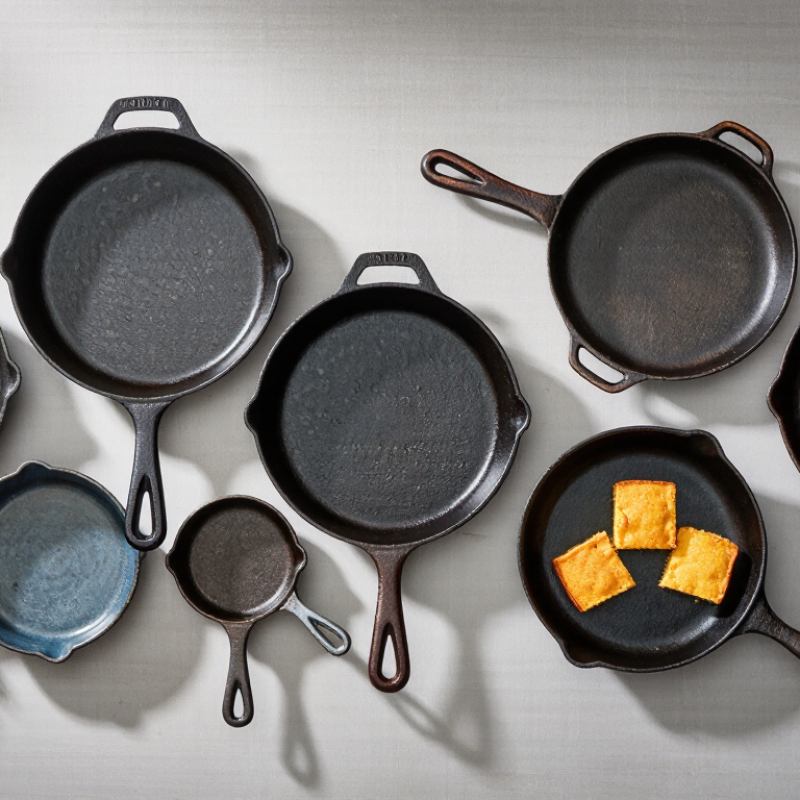
A hand forged skillet begins with disciplined metalwork, not decoration. Each hammer mark can refine the pan’s shape, density, and balance. Skilled makers heat iron evenly and form the cooking surface through repeated forging. The result should feel stable, not awkward, when lifted with one hand. That small test matters.

Material quality remains central. A dense iron body stores heat well, while a smooth cooking surface improves release after proper seasoning. Grand View Research estimates the global cookware market reached about USD 19.8 billion in 2023, with continued growth through 2030. Future Market Insights also identifies cast iron cookware as a growing specialty segment. These figures suggest rising demand, but they do not prove every handmade pan performs equally.

Look closely at the rim, handle joint, and underside. The rim should be even, without sharp flakes or deep cracks. The handle should stay cool enough for controlled movement, although no metal handle stays cool forever. Food-contact safety also requires responsible material selection and traceable production. I would ask for composition records and care instructions before buying internationally. Even an attractive skillet can disappoint if its base warps, seasoning flakes, or weight becomes tiring. A heavier pan is not automatically better. That is worth reconsidering.

Key Materials, Shapes, Sizes, and Handle Designs

10 Best Hand Forged Skillets for Global Buyers

Hand forged skillets differ in feel, heat response, and long-term care. Carbon steel heats quickly and develops a smooth cooking surface. Cast iron holds heat longer, but it weighs more. The 2024 Cookware Market report by Grand View Research identifies durability and material performance as major purchasing factors. A forged surface may show small hammer marks. That is not automatically a defect. It can reveal genuine workshop production, although uneven shaping needs inspection.

Shape affects daily control. A 20–24 cm skillet suits eggs, vegetables, and small households. A 26–30 cm pan offers better space for searing. Round bodies fit most burners, while deeper sides reduce splashing. Handle design deserves equal attention. A long forged handle improves lifting distance from heat. A helper handle supports heavier pans. Wood feels cooler, but it needs careful drying. Metal handles tolerate ovens better and may become dangerously hot. Do not ignore that detail.

Tips: Check the base for wobbling on a flat surface. Measure the handle length before buying internationally. The 2023 Global Household Cooking Appliances report from Euromonitor notes continued interest in durable, repairable kitchen goods, but replacement habits remain common. This makes maintenance important. Dry the skillet immediately, apply a thin oil film, and avoid storing acidic food inside. One weakness remains: product measurements can vary by hand forging. Ask for actual weight, rim diameter, and handle clearance before ordering.

Ten Standout Hand Forged Skillets for Global Buyers

Ten Standout Hand Forged Skillets for Global Buyers

Hand forged skillets bring visible character to everyday cooking. Their hammered surfaces may show small dimples, shallow marks, or slight changes in thickness. These details are normal, not defects by themselves. A reliable buying guide should examine heat response, weight, handle comfort, and finish quality. In practical kitchen use, a skillet should heat steadily without creating an extreme hot spot in the center.

The strongest options usually use sturdy carbon steel or cast iron. Carbon steel often responds faster, while cast iron holds heat longer. Neither choice is perfect. A heavy skillet can sear beautifully but may strain the wrist during repeated lifting. A lighter model feels easier to control, yet it may cool faster when cold food enters the pan. Check the base diameter, wall height, and handle length before ordering internationally. These measurements affect storage, cooking space, and shipping weight.

Seasoning also deserves careful attention. A pre-seasoned surface may arrive uneven or show dry patches after transport. That does not always indicate poor workmanship. Wash it gently, dry it over low heat, and apply a thin layer of cooking oil. Keep moisture away. Buyers should also confirm induction compatibility, oven temperature limits, care instructions, and return terms. For global kitchens, clear documentation matters as much as the skillet itself. A well-made pan should offer dependable performance, but handmade variation remains part of the experience.

10 Best Hand Forged Skillets for Global Buyers - Ten Standout Hand Forged Skillets for Global Buyers

The selection below compares practical hand-forged skillet formats rather than brand-specific products. Dimensions and weights are approximate market benchmarks because handmade cookware can vary slightly from piece to piece.

Rank Skillet Format Typical Material Cooking Diameter Approx. Weight Typical Wall Thickness Handle Configuration Best Use Buyer Considerations
1 Compact Everyday Frying Skillet Hand-forged carbon steel 20 cm / 8 in 1.0–1.5 kg 2.5–3.5 mm Long handle Eggs, small portions, grilled sandwiches Light enough for frequent use; works well on gas, electric, induction, and open-fire cooking when the base is flat.
2 Small Sauté Skillet Hand-forged carbon steel 24 cm / 9.5 in 1.4–2.0 kg 2.5–4.0 mm Long handle with helper grip Vegetables, fish fillets, two-person meals A versatile household size with a useful balance between cooking surface and manageable weight.
3 Standard Family Skillet Hand-forged carbon steel or wrought iron 26 cm / 10.25 in 1.8–2.5 kg 3.0–4.0 mm Long handle Steaks, stir-frying, family breakfasts One of the most practical all-purpose sizes for households; confirm induction compatibility before purchase.
4 Deep-Frying Skillet Hand-forged carbon steel 26 cm / 10.25 in 2.0–2.8 kg 3.0–4.5 mm Long handle with helper grip Shallow frying, braising, curries, one-pan dishes Higher sides help contain oil and sauces; the added depth also increases overall weight.
5 Large Family Searing Skillet Hand-forged carbon steel or wrought iron 30 cm / 11.75 in 2.5–3.5 kg 3.5–5.0 mm Long handle with helper grip Large steaks, poultry, roasted vegetables Provides more searing space but may require a wide burner and additional storage room.
6 Large Two-Handle Skillet Hand-forged wrought iron 30–32 cm / 11.75–12.5 in 3.0–4.2 kg 4.0–5.0 mm Two short side handles Oven-to-table meals, roasting, shared dishes Two handles improve lifting control; verify that both handles fit inside the intended oven.
7 Extra-Large Catering Skillet Hand-forged carbon steel or wrought iron 34–36 cm / 13.5–14 in 4.0–6.0 kg 4.0–6.0 mm Two short handles Group cooking, outdoor kitchens, large batches Best suited to strong cooktops or open fires; shipping cost and handling weight should be checked carefully.
8 Long-Handle Open-Fire Skillet Hand-forged wrought iron 24–28 cm / 9.5–11 in 2.0–3.5 kg 3.5–5.0 mm Extended long handle Campfire cooking, hearth cooking, outdoor grilling The extended handle keeps hands farther from heat; users should still use heat-resistant gloves and stable supports.
9 Oven-Friendly Chef Skillet Hand-forged carbon steel 28 cm / 11 in 2.2–3.0 kg 3.0–4.5 mm Short metal handle with helper grip Frittatas, cornbread, oven finishing, searing Metal handles are generally more oven-friendly than wood; always confirm the handle and coating temperature limits.
10 Traditional Heavy Iron Skillet Hand-forged wrought iron 28–30 cm / 11–11.75 in 3.0–4.5 kg 4.0–6.0 mm Long handle with helper grip High-heat searing, slow cooking, long-term daily use Excellent heat retention but slower to lift and move; suitable for buyers who prioritize durability over low weight.

How to Compare Performance, Craftsmanship, and Value

When comparing hand forged skillets, test performance before admiring the finish. A 26-centimeter pan should sit flat without rocking. Its base needs consistent thickness, while the sidewall should rise smoothly from the cooking surface. Heat retention matters, but slow response can burn butter before onions soften. ENERGY STAR reports that induction cooking can be up to 10% more efficient than conventional electric cooking and about three times more efficient than gas. Therefore, check induction compatibility, magnetic response, and base stability. The handle should remain rigid after repeated lifting. Feel the difference.

Craftsmanship appears in small details. Look for clean hammer marks, a balanced center of gravity, and an oil finish without sticky patches. A well-finished surface is not automatically nonstick. It still needs seasoning and careful drying. I once valued weight too highly; a very heavy skillet felt impressive but became tiring during long cooking sessions. That was a poor assumption. Grand View Research estimated the global cookware market at USD 19.92 billion in 2023 and projects a 6.2% compound annual growth rate from 2024 to 2030. More choices do not guarantee better value. Compare usable cooking area, wall thickness, handle design, maintenance time, shipping weight, and warranty terms. A cheaper pan may cost more through uneven heating, rust repair, or replacement. Examine the rim closely. A rough edge can damage cloths and complicate cleaning.

10 Best Hand-Forged Skillet Profiles for Global Buyers

Scores use a 100-point comparison framework covering heat retention, responsiveness, cooking-surface consistency, craftsmanship indicators, and value. Larger skillets generally provide more cooking capacity but require greater lifting effort and longer preheating. Prices represent typical international retail ranges for comparable hand-forged iron or carbon-steel skillets, excluding shipping and import duties.

Buying, Maintaining, and Importing a Forged Skillet Safely

Buying a hand-forged skillet requires more than comparing weight and price. Inspect the cooking surface for deep pits, sharp burrs, or uneven cracks. A solid skillet should feel balanced, with a handle that stays firmly attached. Ask the maker about the iron composition, pre-seasoning method, and food-contact finish. Clear answers show practical manufacturing knowledge. Vague promises deserve caution.

Importing safely involves details that are easy to overlook. Confirm the seller’s packing method before payment. Thick cardboard, edge protection, and moisture-resistant wrapping help prevent damage and rust during transit. Request accurate dimensions and weight, because freight charges often change after dispatch. Check your country’s customs rules, duties, taxes, and required origin documents. These requirements vary widely. Do not assume the seller handles every fee. Written confirmation is safer than a casual message.

Tips: Wash a new skillet with warm water, dry it immediately, and apply a very thin layer of cooking oil. Heat it gradually to build a stronger protective surface. Avoid soaking cast iron overnight. Store it completely dry, perhaps with a folded cloth underneath. If rust appears, scrub it away and reseason the pan. I once underestimated humidity during storage; the skillet looked fine, then developed orange spots within days. That small mistake changed my maintenance routine. Check the pan regularly, especially after long shipping or seasonal storage.

No products in the cart.