What Are the 7 Best Modern Cabinets for Every Home?
Choosing the right Modern Cabinets is less about chasing a showroom trend. It is about fitting real routines, room proportions, budgets, and maintenance habits.
The National Kitchen & Bath Association’s 2024 Kitchen Trends Report highlights storage efficiency, durable materials, and integrated appliances as major design priorities. Houzz’s 2024 U.S. Kitchen Trends Study also shows that cabinetry remains a central upgrade during kitchen renovations. These findings matter because cabinets shape daily movement, not only visual appeal. A deep drawer can hold heavy cookware without awkward lifting. A tall pantry can keep small appliances away from crowded countertops. A matte door may hide fingerprints better than a glossy finish, though it can still show dust near busy handles.
This guide examines seven modern cabinet styles for different homes and design goals. The selection includes flat-panel doors, contemporary Shaker cabinets, natural wood veneer, two-tone layouts, handleless systems, glass-front storage, and flexible modular units. Each option receives attention for appearance, construction, storage behavior, cleaning needs, and long-term value. Material quality matters. So does installation accuracy.
No ranking fits every wall. That is the uncomfortable part. A beautiful cabinet can fail in a narrow kitchen. A low-cost system can perform well when carefully planned. The best choice depends on door clearance, lighting, ventilation, and how often the room is used. I may favor clean lines, but practical homes often need warmer textures and forgiving finishes. These comparisons aim to make that decision clearer, with evidence from professional reports and details you can test at home.
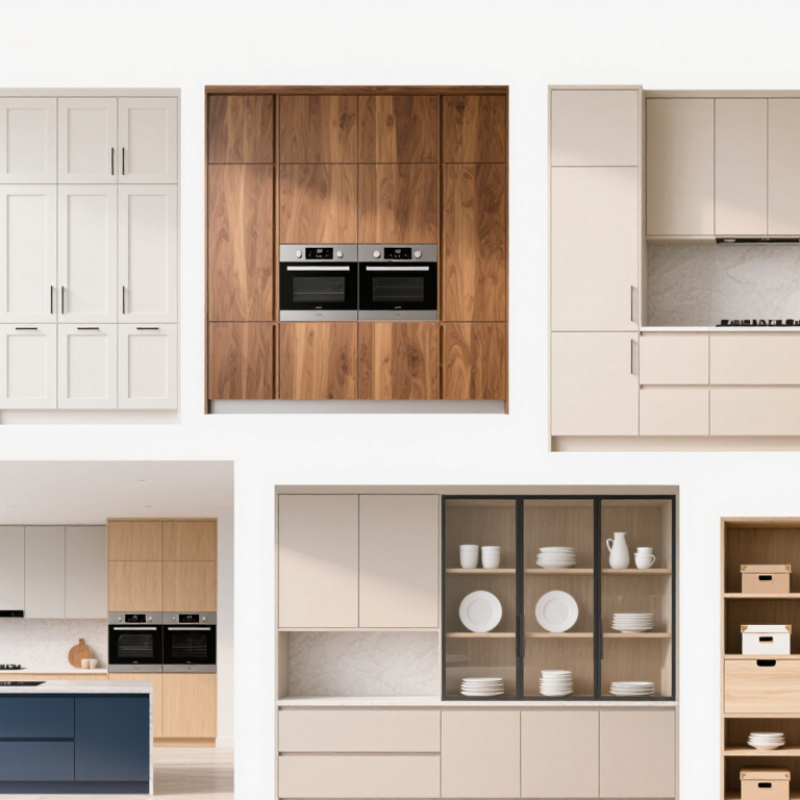
Modern Cabinet Styles for Different Home Interiors
Modern cabinets should respond to the room, not overpower it. Houzz’s 2024 U.S. Kitchen Trends Study reports that 76% of renovating homeowners replace all cabinet fronts. That choice makes style and proportion especially important.
For bright Scandinavian interiors, flat-panel white cabinets create a calm, reflective surface. Natural-oak slab doors suit warm minimalism and soften concrete floors. Two-tone cabinets work well in open-plan kitchens, especially with pale uppers and deeper base units. Handleless doors support contemporary interiors, but they need precise installation and frequent cleaning. Small gaps show everything. Fluted-front cabinets add texture beside smooth walls, although dust can collect in the grooves. Glass-front units suit classic-modern rooms and display only selected pieces. Dark matte cabinets bring depth to large, well-lit spaces, but they can make narrow kitchens feel smaller.
The National Kitchen and Bath Association’s 2024 Kitchen Trends Report highlights storage efficiency, natural materials, and layered lighting as major design priorities. That evidence supports pairing modern doors with deep drawers, adjustable shelves, and under-cabinet lighting. In my project experience, storage planning usually matters more than the door profile. A beautiful kitchen can still fail when appliances interrupt the workflow. Houzz also reports that 63% of renovating homeowners add specialty storage, such as tray dividers or pull-out waste systems. I would question any “best” list that ignores household habits, ceiling height, and daylight. A glossy finish may photograph well, yet fingerprints can quickly change the daily experience.
7 Modern Cabinet Types for Different Home Interiors
Typical cabinet depths in U.S. residential planning, shown in inches. Depths are common dimensions—not a ranking of styles—and can vary by design and manufacturer.
Base and tall cabinets are commonly about 24 inches deep, while wall cabinets are often about 12 inches deep. Check project specifications before purchasing.
Key Materials and Construction Features to Compare
Modern cabinets should be judged by their materials, joints, and daily performance, not appearance alone. The seven strongest options include plywood, MDF, particleboard, solid wood, laminate, thermofoil, and metal cabinetry. Plywood boxes resist moisture and hold screws well. MDF creates smooth painted doors but needs careful edge sealing. Particleboard costs less, yet swelling can occur after leaks. Solid wood feels substantial, although it expands and contracts with humidity.
Construction details often decide long-term value. Look for full-extension drawer slides, adjustable hinges, reinforced corners, and backs secured firmly to the cabinet box. Dovetail drawers are useful, but poor installation can still cause failure. The Kitchen Cabinet Manufacturers Association A161.1 standard provides a recognized benchmark for cabinet durability and performance. Ask whether the product has been tested against that standard. Details matter.
The 2024 Houzz U.S. Kitchen Trends Study reported that 76% of renovating homeowners upgraded their cabinetry. That demand makes comparison more important, especially when labor costs exceed expectations. Check the thickness of panels, the finish warranty, and the replacement process for damaged doors. Moisture-resistant construction suits kitchens near sinks and dishwashers. Low-emission adhesives are another practical consideration. The EPA’s indoor-air guidance supports choosing products with reduced formaldehyde emissions, but labels can be confusing. Measure twice. I have seen attractive cabinets fail because installers ignored uneven walls or ventilation gaps. A perfect material cannot correct careless fitting.
The Seven Best Modern Cabinet Options for Every Home
Modern cabinets can make a home feel calmer, brighter, and easier to maintain. The seven best modern cabinet options for every home are slab, Shaker, flat-panel wood, two-tone, glass-front, handleless, and inset cabinets. Houzz’s 2024 U.S. Kitchen Trends Study reports that Shaker doors remain highly popular, appearing in 61% of renovated kitchens. That preference makes sense. Their clean frame suits both warm oak and matte painted finishes.
Slab cabinets create the strongest minimalist look, especially in small kitchens. Flat-panel wood adds visible grain and softens hard surfaces. Two-tone cabinets can separate an island from wall storage. Glass-front doors display ceramics but require discipline.
Handleless fronts reduce visual noise. Inset cabinets provide precise lines, although they usually demand careful installation. Shaker cabinets remain the flexible choice. Seven options, different moods.
Tips
Measure door clearances before ordering. Test finishes beside your flooring and daylight. The National Kitchen & Bath Association’s 2024 Design Trends Report highlights storage, durable materials, and layered lighting as major planning priorities. Add deep drawers for cookware, adjustable shelves for small appliances, and moisture-resistant finishes near sinks. Keep it honest. A beautiful door cannot fix poor internal storage. I have seen homeowners regret choosing style before workflow. Leave space for opening doors, cleaning edges, and changing needs. A 2024 Houzz study also recorded a median major kitchen remodel spend of about $60,000, showing why cabinet planning deserves careful review.
How to Choose Cabinets by Room, Storage, and Lifestyle
What Are the 7 Best Modern Cabinets for Every Home?
Choosing modern cabinets starts with the room, not the trend. In kitchens, flat-panel doors create a clean look and simplify daily wiping. Deep drawers suit heavy cookware better than low shelves. A tall pantry stores cereal, appliances, and cleaning supplies in one vertical zone. Bathrooms need moisture-resistant materials, especially near sinks and showers. I once chose beautiful shallow cabinets, but they wasted valuable wall space. That mistake still influences how I plan storage.
For open living areas, glass-front cabinets display books while hiding clutter behind lower doors. Modular cabinets work well in changing homes because sections can move or expand. Handleless designs look calm, but finger marks may appear quickly. Consider your habits honestly. Do you cook daily, entertain often, or prefer empty surfaces? Measure door swings, wall width, and appliance clearance before ordering. Professional installers should also check wall strength, plumbing, ventilation, and uneven floors.
Tips: Keep frequently used items between waist and eye level. Store rarely used dishes higher. Choose adjustable shelves for changing needs. Test drawer movement in person when possible. Matte finishes can hide small marks better than glossy ones. A cabinet plan may look perfect on paper, yet real routines can expose flaws. Leave room for future needs, even if the layout feels slightly less dramatic.
What Are the 7 Best Modern Cabinets for Every Home? — How to Choose Cabinets by Room, Storage, and Lifestyle
| Cabinet Type | Best Rooms | Storage Strength | Best Fit for | Practical Considerations |
| Flat-Panel Cabinets | Kitchens, bathrooms, laundry rooms | Simple, uninterrupted fronts suit a range of base and wall-cabinet layouts. | Minimalist spaces and people who prefer clean lines. | Smooth fronts are generally easy to wipe down; fingerprints may be more noticeable on some dark or glossy finishes. |
| Slim Shaker Cabinets | Kitchens, bathrooms, living rooms | Standard cabinet boxes can be configured with shelves, drawers, or cupboards. | Homes that balance a modern look with a lightly detailed door style. | The recessed frame adds visual detail and may take a little more effort to clean than a flat front. |
| Glass-Front Cabinets | Kitchens, dining rooms, display areas | Showcases dishes, glassware, or decorative items while keeping them behind a door. | People who want display storage and are comfortable keeping visible contents organized. | Glass reveals what is inside and needs regular cleaning; use suitable safety glass and hardware for the application. |
| Tall Pantry Cabinets | Kitchens, pantry areas, utility rooms | Uses vertical space for dry goods, small appliances, and household supplies. | Busy households looking to group frequently used provisions in one place. | Plan shelf heights around the items stored, and keep everyday goods at an accessible height. |
| Wide Drawer-Base Cabinets | Kitchens, craft rooms, home offices | Drawers make cookware, utensils, tools, and supplies easier to see and reach than deep cupboard shelves. | People who value accessible storage and clear organization. | Heavy contents call for drawer slides rated for the load; dividers can help keep small items in place. |
| Corner Cabinets with Pull-Outs | Kitchens, laundry rooms | Designed to make items in a corner cabinet easier to access with rotating or sliding organizers. | Layouts where usable storage in a corner is more important than a simple open shelf. | Available mechanisms and required clearances vary, so confirm measurements and door swing before ordering. |
| Floating Vanity Cabinets | Bathrooms, powder rooms | Stores toiletries and bathroom supplies while leaving floor space visible beneath the cabinet. | People seeking a lighter visual profile and easier access to the floor below. | Requires secure wall support and plumbing coordination; check mounting height and available wall structure. |
